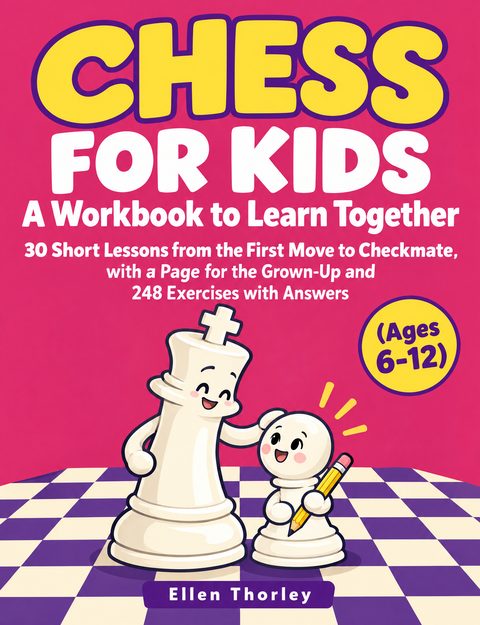
Chess for Kids: A Workbook to Learn Together
30 Short Lessons from the First Move to Checkmate, with a Page for the Grown-Up and 248 Exercises with Answers (Ages 6-12)
by Ellen Thorley
- Formats
- Paperback
- Paperback size
- 8.5 × 11 in
- Published
- October 2026
Your child wants to learn chess, and you may not play at all. This workbook is for the two of you, at the same table.
Chess for Kids: A Workbook to Learn Together is for children aged 6 to 12 who are starting from zero or know only how the pieces move, and for the grown-up who sits next to them: a parent, a grandparent or a teacher. You do not need to know how to play chess to use this book. It takes your child from the first square to a full game played by the rules, and to finding a mate in one and a mate in two.
The way to use it is one short lesson a sitting: read the explanation together, set the position on a real chess set, then write the answers in pencil in the book. It makes a birthday gift for a child who has just started chess at school or at home. It is not for children who already play in tournaments: it does not teach openings, long game plans or the chess clock.
What is inside
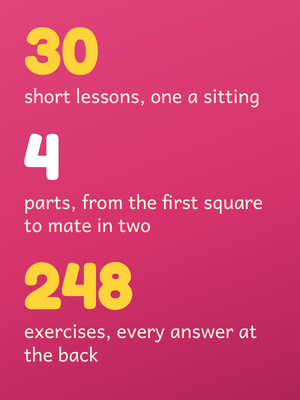
- 30 short lessons in four parts, from the board and its squares to mate in two. No exercise uses a piece or a rule your child has not met yet.
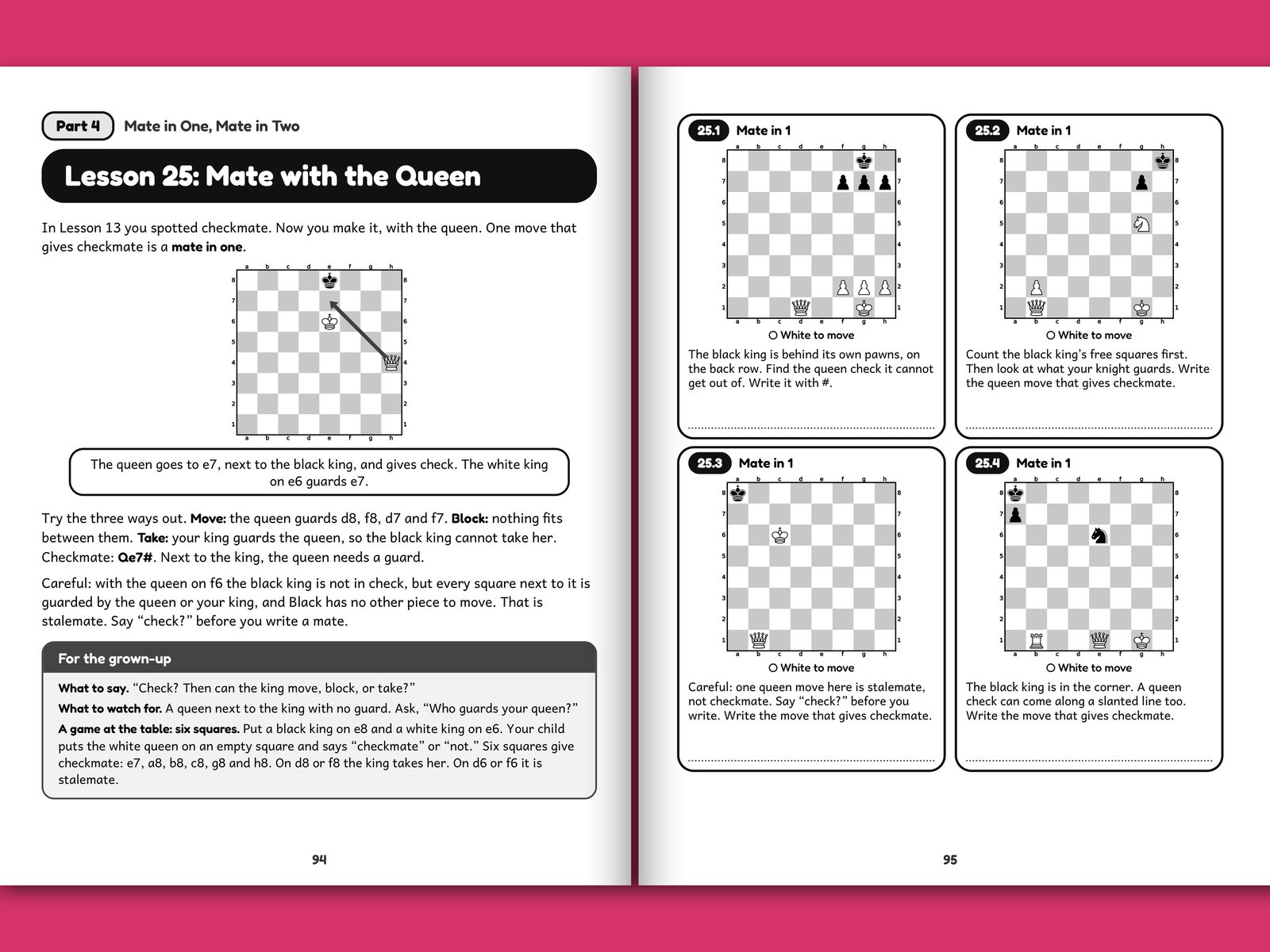
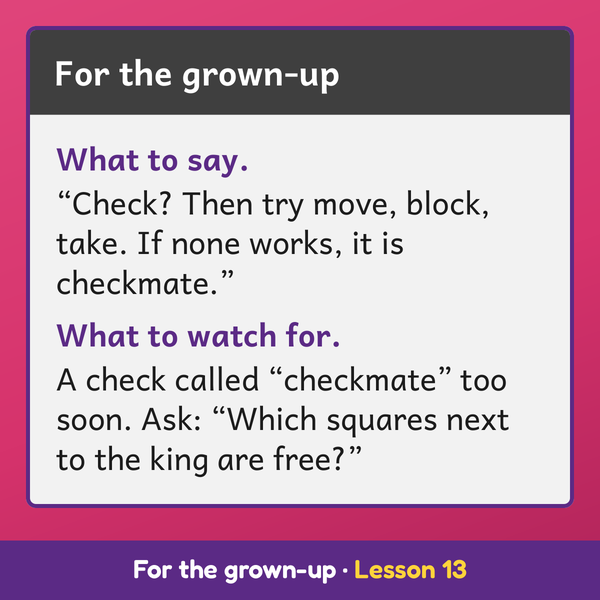
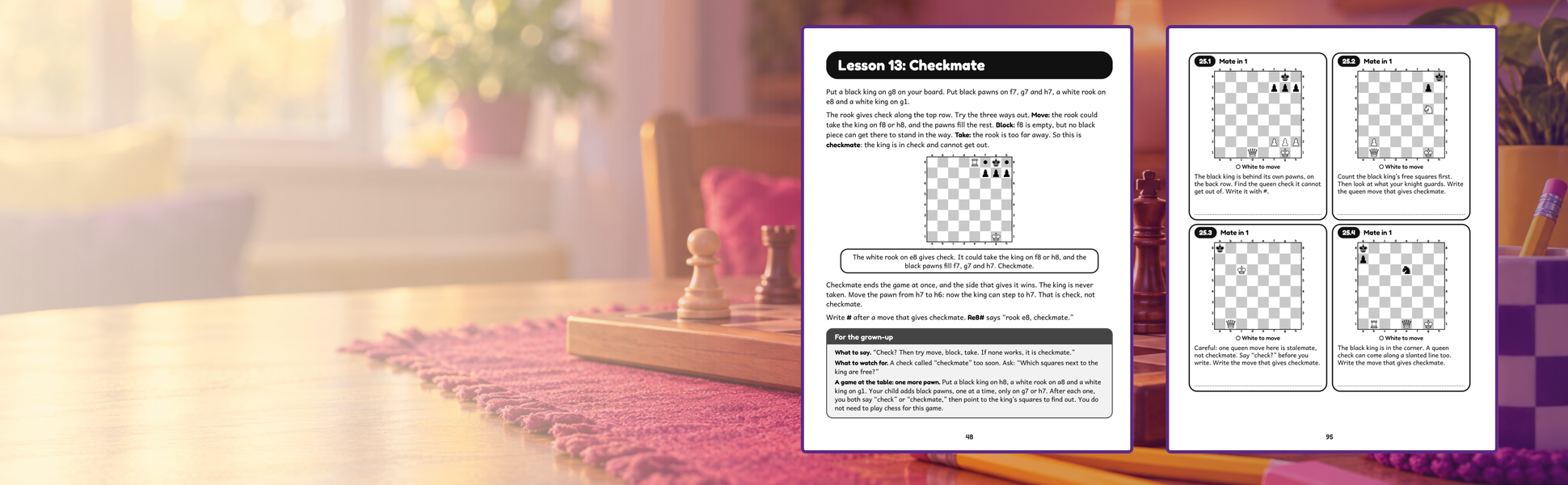
- A box called "For the grown-up" in every lesson, with words to say, what to watch for and a short game to play at the table, plus two pages at the start on how to use the book together.
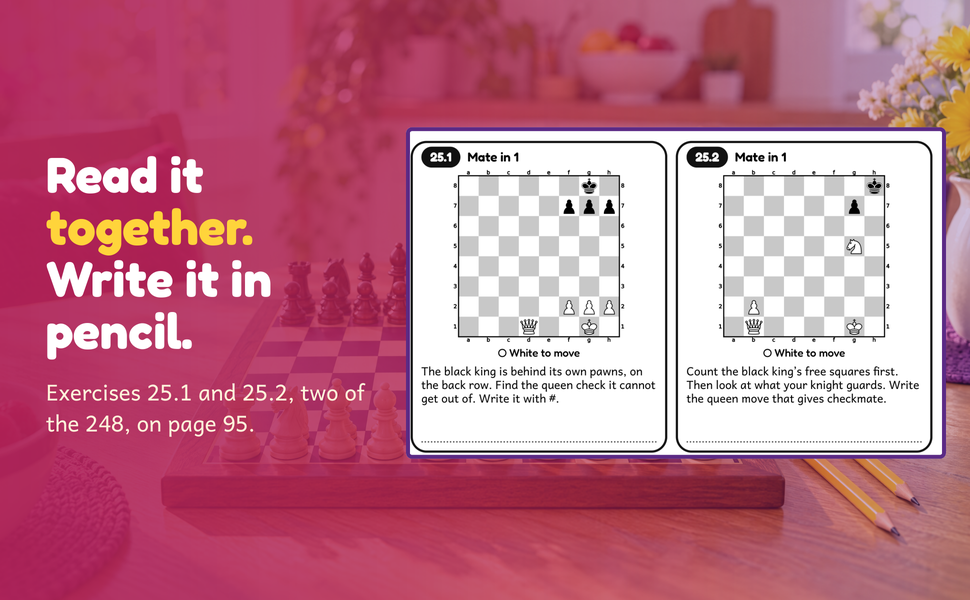
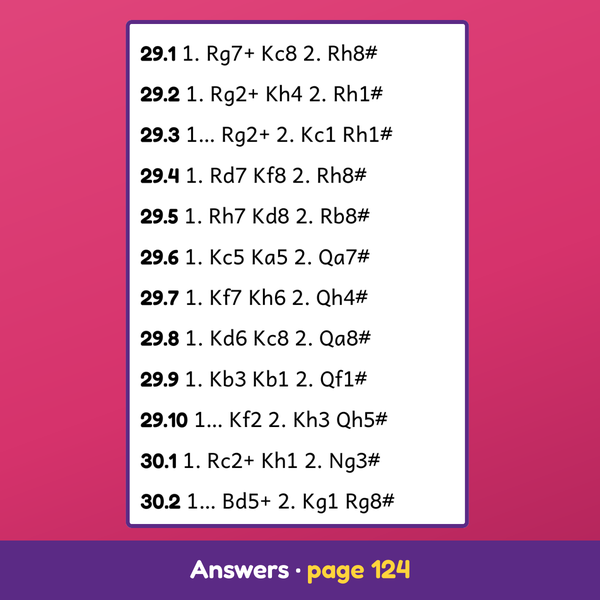
- 248 exercises with answers, all at the back of the book in order by lesson number. No answer is printed under an exercise.
- Boards and answers checked by a computer program before printing. Every board with both kings shows a position the rules allow, and every answer at the back is the answer the program proved. For each Mate in 2, the first move was tested against every reply of the other side.
- Rules from the current official Laws of Chess: check, checkmate, stalemate, castling, promotion, en passant and how a game ends, then what the pieces are worth, forks, pins and skewers.
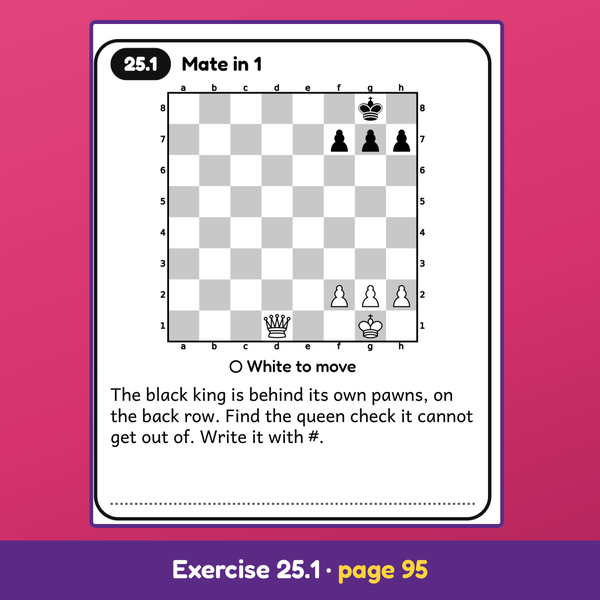
- Large 8.5 x 11 inch pages, up to four exercise boards to a page, each exercise with pencil lines for the answer.
- Notation one step at a time. Until Lesson 9 your child writes only the names of squares, like e4. Lesson 9 teaches how to write a move, and the signs x, + and # come in Lessons 10, 11 and 13.
- A score chart at the end of every lesson with exercises: one point for each exercise, two for a Mate in 2. The total goes on a certificate at the end of the book.
- Words to Know at the back lists the main chess words, each with the lesson that explains it.
- What you need: this book, a pencil for each of you and a real chess set, which is not included.
By the last lesson your child knows how a game is played and how it ends, and looks for checkmate two moves ahead. Then the two of you play whole games at the table.
Set up the board and open Lesson 1.
Inside the book
See it in use