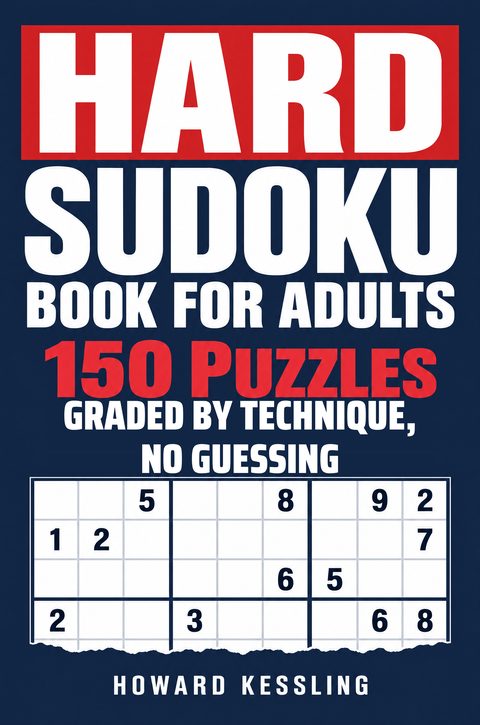
Hard Sudoku Book for Adults
150 Puzzles Graded by Technique, No Guessing
by Howard Kessling
- Formats
- Paperback
- Paperback size
- 6 × 9 in
- Published
- November 2026
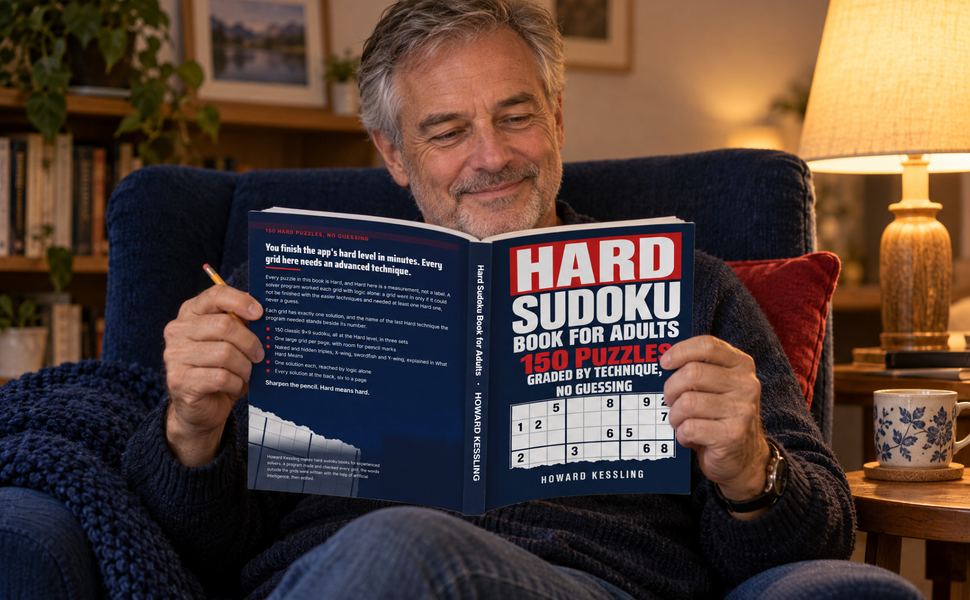
Hard here is a measurement. A solver program worked all 150 grids with logic alone, and a grid went into this book only if the program needed a Hard technique, such as an X-wing or a Y-wing, to finish it, and never a guess.
This book is for the experienced solver who finishes the hard grids of a phone app or a daily paper in a few minutes, and for the spouse, son or daughter who buys a gift for the family's sudoku solver. The goal is a grid that still makes you think, solved by logic alone, with exactly one solution. You work with a pencil, one grid to a page, writing the candidates in the cells as you go. It makes a birthday gift for the family's sudoku solver who has outgrown the easy books.
What's inside:
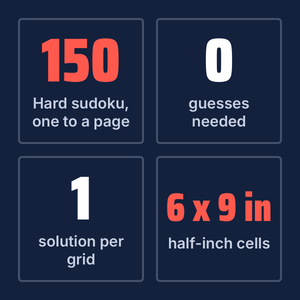
- 150 puzzles, all Hard. Classic 9 x 9 sudoku in three sets of 50. There are no Easy or Medium puzzles to get through first.
- A level you can check. The program tried the easier techniques first: singles, pointing, box/line reduction and pairs. A grid was kept only if they were not enough and it needed at least one Hard technique: a naked or hidden triple, an X-wing, a swordfish or a Y-wing.
- No guessing, one solution. An exhaustive search of every possible filling found exactly one solution for each grid.
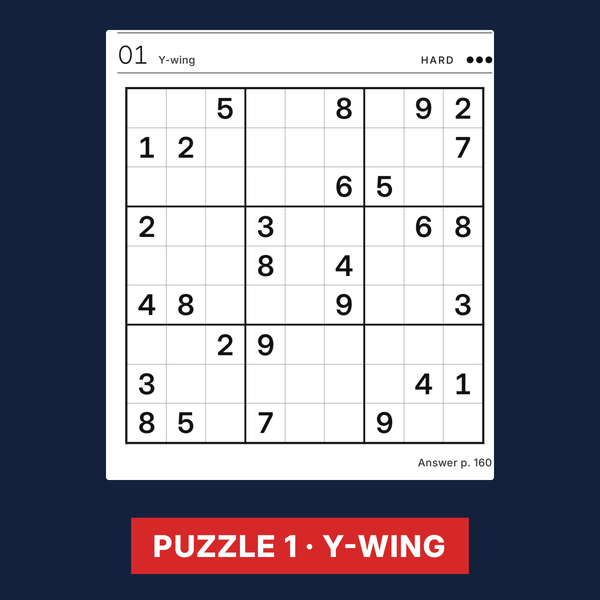
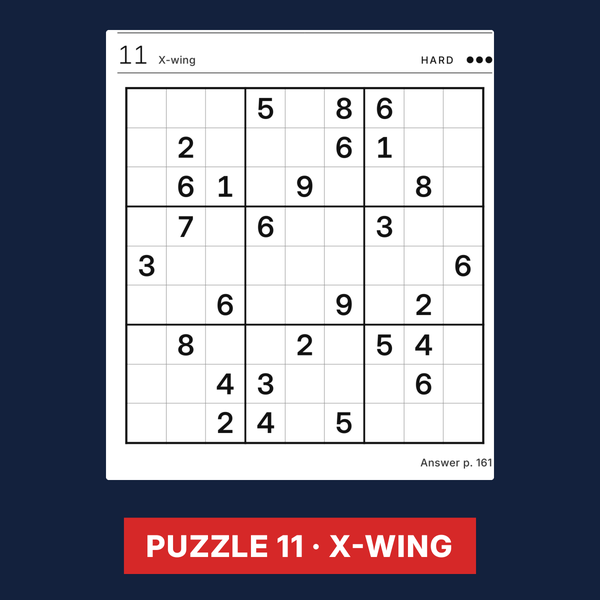
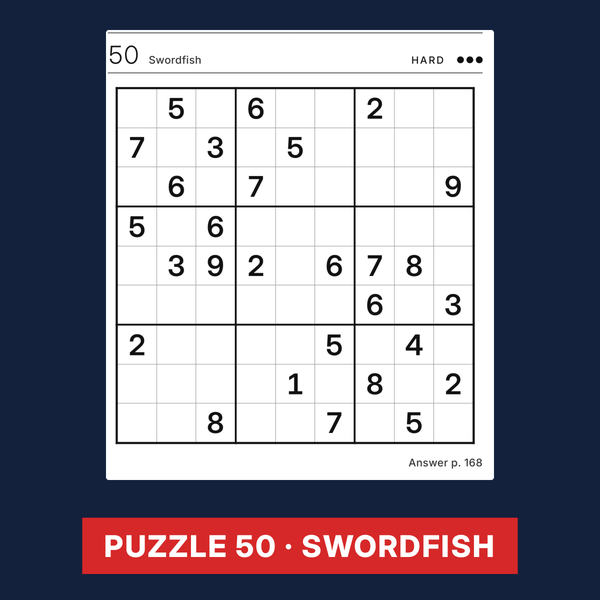
- The technique on every grid. Beside each puzzle number is the name of the last Hard technique the program needed for it. Most grids are named Y-wing; the others are X-wing, the triples and one swordfish. You may find another path.
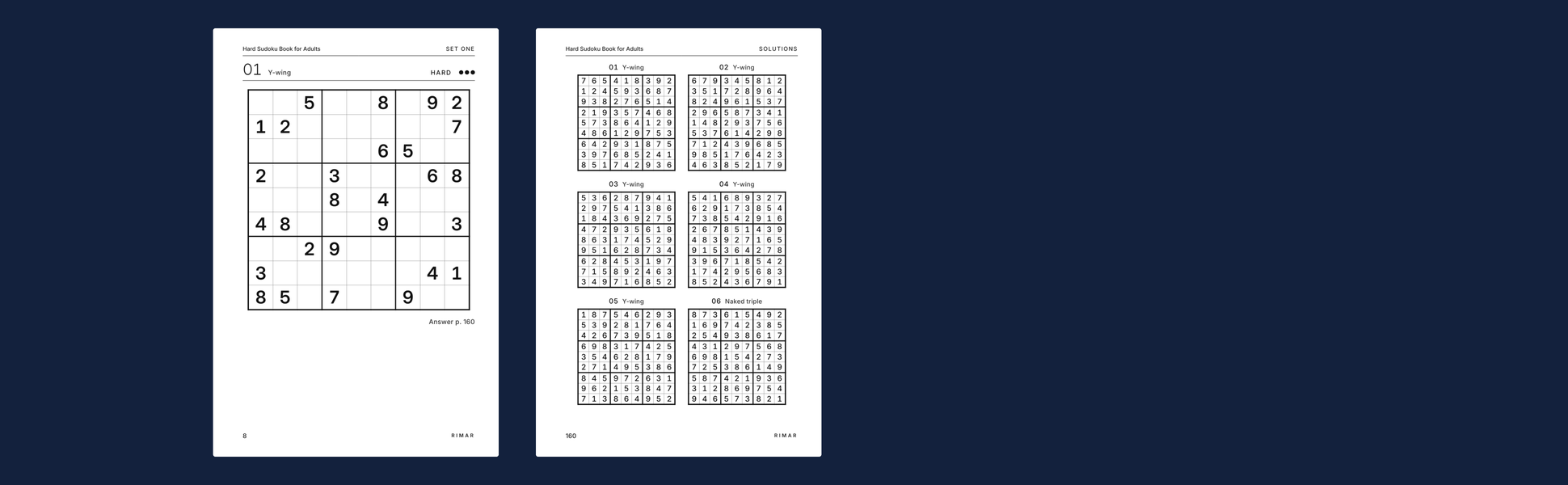
- Room for pencil marks. One grid per page on a 6 x 9 inch page, with half-inch cells, the clues in bold and thick lines around the nine boxes.
- What Hard Means. Two pages at the front define the solver's words (candidate, pointing, box/line reduction, pairs) and give each Hard technique in one or two lines, with what it removes.
- Solutions at the back. Six to a page, in number order, each with its puzzle's technique. Under every grid, "Answer p." gives the page of its solution.
- Checked by a second program. No grid appears twice, and every printed solution matches its puzzle.
What it is not. It is not a book for beginners, and it does not teach the techniques step by step: each one is defined in a line or two, with no worked examples. The grids are printed back to back, so use a pencil, not a marker.
Take a pencil, open to Puzzle 1, and write in the candidates.
Inside the book