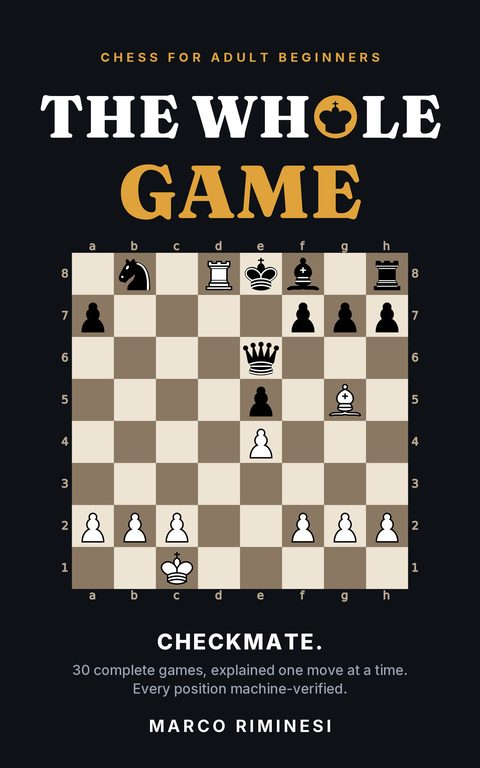
The Whole Game
Chess for Adult Beginners — 30 Complete Games, Explained One Move at a Time, From the Opening to the Checkmate
by Marco Riminesi
- Formats
- Paperback, Kindle
- Paperback size
- 6 × 9 in
- Published
- September 2026
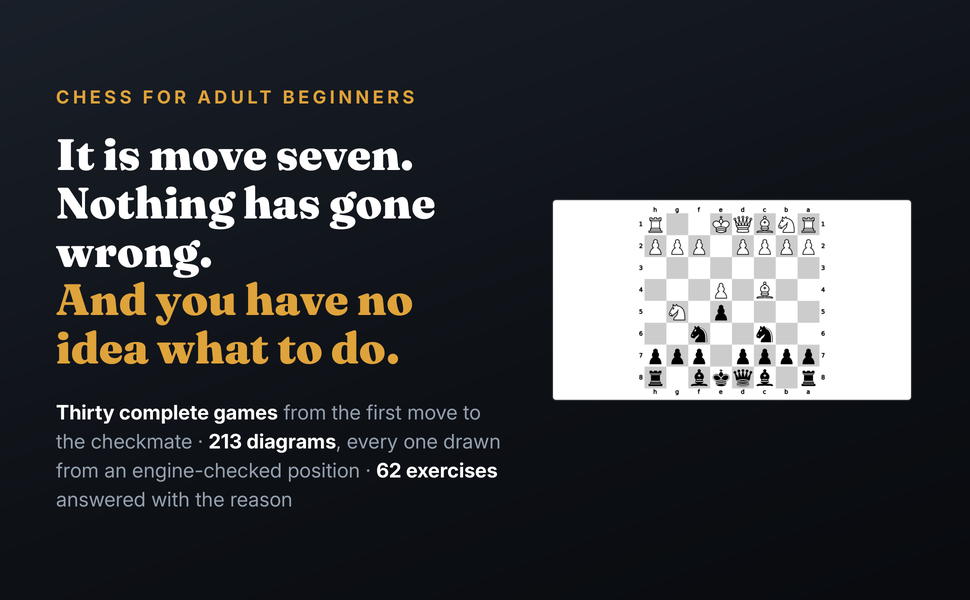
You know how the pieces move. You still lose — and cannot say why.
Your opening book stopped at move six. The game did not. From move seven on you are guessing, and the books meant to help either explain the rook all over again, or lose you at "deflection and discovered attack" on page two.
This book starts where the others stop. It is written for adults who know how the pieces move and still lose: people who play online under about 800, or once a week against someone who always wins, and cannot say what went wrong. Its one job is to take you from "I know the rules" to knowing what to do from move seven on.
What's inside:
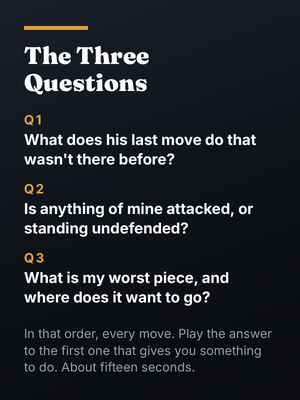
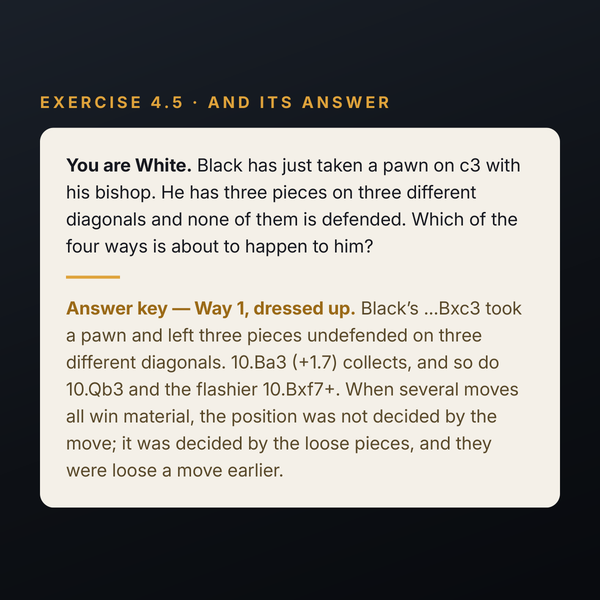
- A three-question check you run before every move — what did his last move change, what of mine is loose, what is my worst piece — so you stop giving pieces away for nothing. About fifteen seconds a move.
- Six openings, three with White and three with Black, each carried past the point where other books abandon you, into a printed middlegame position with both sides' plans written underneath.
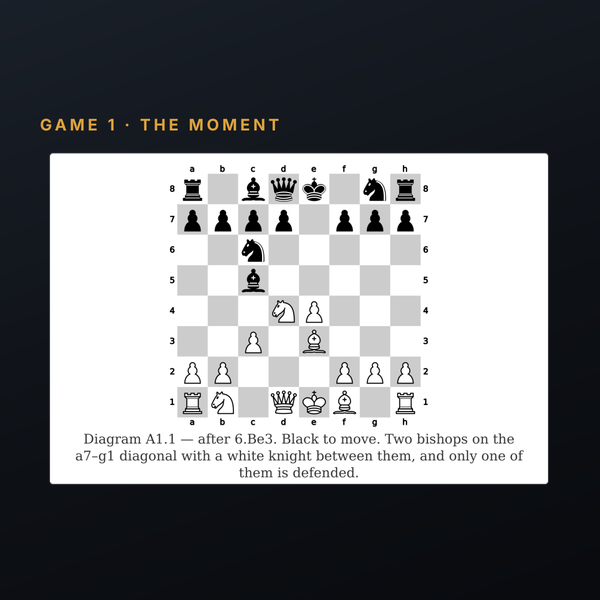
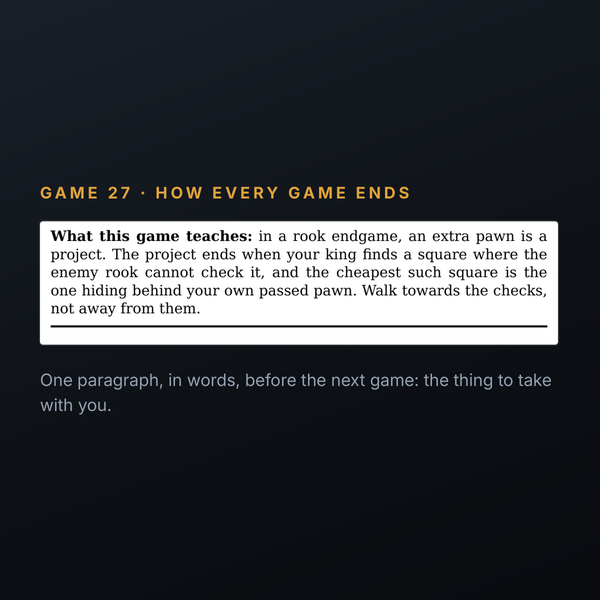
- 30 complete games, from the first move to the checkmate, explained one move at a time in a vocabulary the book teaches you first — grouped by what decided them: the scan, the opening, a plan, an attack on the king, the endgame.
- The twelve endgames that are enough — the ones you will actually reach, and how to win or draw each.
- 62 exercises with reasoned answers, a glossary of every technical term the book uses, and an index of themes and positions.
- An eight-week plan at the back: one idea a week, and the games to practise it in.
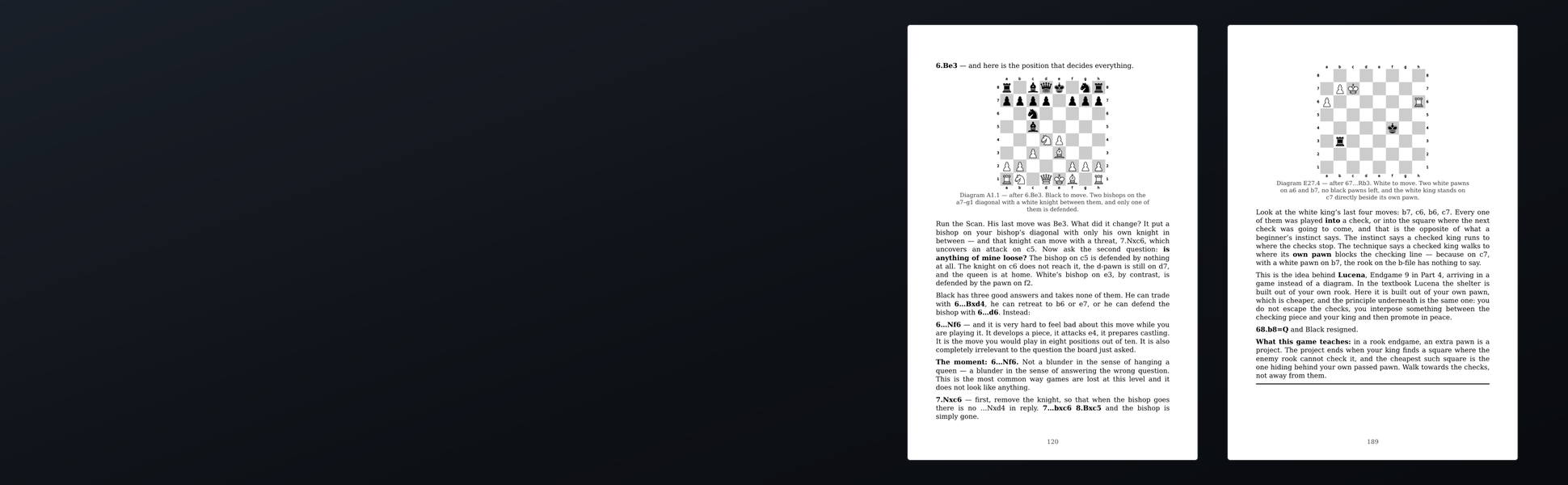
Every move was checked by a chess engine — legal moves, mates, and every claim like "this loses a piece" — and each of the 213 diagrams is drawn from the same verified position, with the coordinates printed on all four edges. Text and picture cannot disagree. Twenty-nine of the thirty games were composed for this book to show one mistake each, and say so under their title; the thirtieth is Morphy–Isouard, Paris 1858, credited in full.
How it is meant to be used: read in a chair, with no board in front of you, one chapter or one game at a time. In Parts 1 and 4 you are never asked to hold more than five moves in your head, and in the games there is a diagram at every moment that decides something.
What it is not. It is not a children's book, it does not teach you the rules, and it does not promise you a rating. If you have never moved a piece, start with a rules primer and come back. If bullet is the chess you play, the fifteen seconds this procedure costs are seconds you do not have.
Turn to move seven. This time you have something to do.
Inside the book
More from RIMAR
All books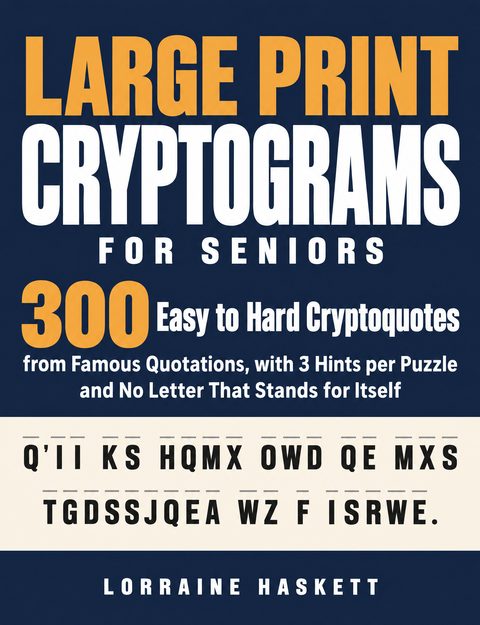 Large Print Cryptograms for Seniors
Lorraine Haskett
Paperback · Oct 2026
Large Print Cryptograms for Seniors
Lorraine Haskett
Paperback · Oct 2026
 World Geography Activity Book for Kids Ages 8–12
Joanna Westbury
Paperback · Oct 2026
World Geography Activity Book for Kids Ages 8–12
Joanna Westbury
Paperback · Oct 2026
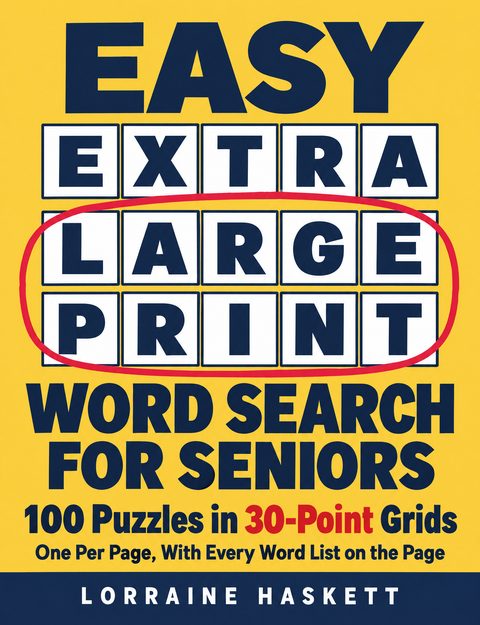 Easy Extra Large Print Word Search for Seniors
Lorraine Haskett
Paperback · Oct 2026
Easy Extra Large Print Word Search for Seniors
Lorraine Haskett
Paperback · Oct 2026
 Learn All 50 States and Capitals
Joanna Westbury
Paperback · Sep 2026
Learn All 50 States and Capitals
Joanna Westbury
Paperback · Sep 2026